Back to blog
Best ppllcaccounting.com Alternatives for Small Businesses
Explore the top ppllcaccounting.com alternatives for small businesses. Find the right accounting solution tailored to your needs today!


Explore the top ppllcaccounting.com alternatives for small businesses. Find the right accounting solution tailored to your needs today!
If you’re searching for ppllcaccounting.com alternatives, the good news is that the market has strong options built specifically for small businesses and entrepreneurs. The right provider depends on your credentials needs, budget, and how much proactive support you want year-round, not just at tax time.
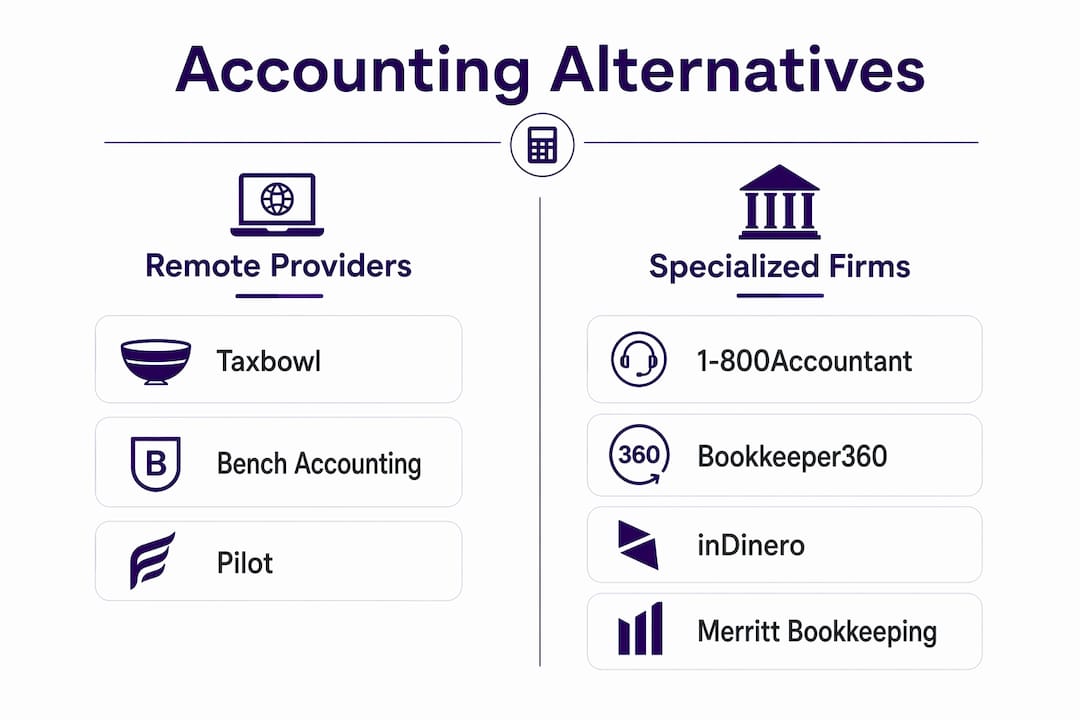
Here’s a quick look at the strongest alternatives available in the US:
One credential distinction worth knowing upfront: CPAs handle complex tax planning and audits, Enrolled Agents (EAs) specialize in IRS representation and tax prep at a lower cost, and bookkeepers manage day-to-day transaction recording. Matching the credential to your actual need saves money and avoids overpaying for expertise you don’t yet require.
Industry-specialized firms are often more responsive and cost-effective for solo consultants and small e-commerce businesses than large, generic firms.

The providers above differ most on service depth, communication style, and how proactively they engage with your finances beyond filing deadlines.
| Provider | Service Focus | Pricing Model | Support & Communication | Reporting Capabilities | Best For |
|---|---|---|---|---|---|
| Taxbowl | Bookkeeping, accounting, payroll, CFO | Subscription-based | Slack, real-time team access | Real-time financial visibility, cash flow insights | Startups and small businesses wanting proactive support |
| Bench Accounting | Bookkeeping, tax prep | Monthly subscription | Dedicated bookkeeper, messaging | Monthly financial statements | Small businesses wanting clean books, no software hassle |
| Pilot | Bookkeeping, CFO services | Monthly subscription | Dedicated team, email/video | QuickBooks-based reports, investor-ready financials | Venture-backed startups |
| 1-800Accountant | Bookkeeping, payroll, tax, CPA access | Tiered plans | Phone, portal, CPA on call | Tax reports, payroll summaries | Businesses wanting full-service CPA access |
| Bookkeeper360 | Bookkeeping, advisory, payroll | Hourly or monthly | Dedicated advisor, video calls | QuickBooks/Xero integration, custom reports | E-commerce and product businesses |
| inDinero | Accounting, tax, CFO | Tiered subscription | Dedicated team, portal | Full financial statements, strategic reporting | Growing companies needing bundled services |
| Merritt Bookkeeping | Basic bookkeeping | Flat monthly fee | Email only | Monthly QuickBooks reports | Micro-businesses with simple finances |
Bookkeepers typically work across QuickBooks, Xero, and similar platforms, so software compatibility is rarely a blocker when switching. What separates the best providers is whether they deliver proactive planning beyond tax season, not just annual return filing.
Remote CPAs work well for most small businesses in 2026. Cloud accounting tools and secure portals make location far less relevant than fit, responsiveness, and whether the firm actually understands your business model.
Picking the right provider comes down to matching their strengths to your specific situation, not just comparing price tags.
Key criteria to evaluate:
Business owners often delay switching due to loyalty or discomfort, but unclear pricing and missing signs you need a bookkeeper are real red flags worth acting on. Recognizing those warning signs early saves you from compounding financial problems.
Pro Tip: Ask any shortlisted provider: “How do you communicate between tax seasons?” A vague answer usually means you’ll only hear from them in april.
Small, industry-specialized firms consistently outperform large generalist firms on responsiveness and cost for small business clients. Size is not a proxy for quality.
Switching providers is less disruptive than most business owners expect, especially with a clear plan. The best time to switch is at the start of a new reporting cycle, such as the beginning of a fiscal quarter or the new year, to keep your financial records clean and continuous.
A well-managed handover typically takes about a week or two when your books are in good shape. Here’s a practical timeline:
Staying with a poor provider out of habit carries more risk than a planned switch. Missed filings, unclear reporting, and unresponsive communication are harder to recover from than a two-week transition period. A calm, defined handover plan limits disruption and gives you a clean financial start.
Pro Tip: Before your final meeting with your outgoing provider, download a full export of your QuickBooks or Xero data yourself. Don’t rely on the handover alone.
If you’ve been comparing cloud accounting options and want something more than a once-a-year check-in, Taxbowl is worth a close look. Most accounting services hand you a report after the fact. Taxbowl gives you a dedicated team that stays in your corner all year, communicating through Slack so you can get answers fast without scheduling a formal call.
The difference shows up in cash flow. When your books are current and your team is proactive, you catch problems early instead of discovering them at year-end. Taxbowl’s bookkeeping services for small businesses cover everything from daily transaction recording to payroll and invoicing, with real-time visibility built in. For businesses ready to think bigger, Taxbowl also offers fractional CFO services to support strategic financial decisions as you grow.
Ready to see what a proactive accounting partner looks like for your business? Talk to a Taxbowl expert and get a clear picture of what’s possible.
The strongest ppllcaccounting.com alternatives match your credential needs, communication preferences, and growth stage rather than simply offering the lowest price.
| Point | Details |
|---|---|
| Match credentials to needs | Use a CPA for tax strategy, an EA for IRS matters, and a bookkeeper for daily reconciliation. |
| Demand proactive communication | The best providers flag cash flow issues between filing deadlines, not only at year-end. |
| Transition timing matters | Switching at the start of a reporting cycle takes 5–10 business days with well-maintained books. |
| Get a signed engagement letter | Written scope and fees protect you from surprise charges during and after any provider change. |
| Taxbowl for proactive support | Taxbowl suits small businesses and startups that want real-time financial visibility and a dedicated year-round team. |
Top alternatives include Taxbowl, Bench Accounting, Pilot, 1-800Accountant, Bookkeeper360, inDinero, and Merritt Bookkeeping. The best fit depends on your service needs, budget, and how much proactive support you want.
CPAs handle complex tax planning and audits, Enrolled Agents specialize in IRS representation and tax preparation at a lower cost, and bookkeepers manage daily transaction recording and reconciliation.
A well-planned transition typically takes 5–10 business days when your books are current. Starting at the beginning of a reporting cycle keeps financial records clean and minimizes disruption.
Yes. Taxbowl specializes in bookkeeping, accounting, and payroll for startups and small businesses, with a dedicated team approach and real-time financial visibility designed for owners who need clarity without complexity.
Remote providers work well for most small businesses. Cloud accounting tools and secure communication platforms make location far less important than fit, responsiveness, and the provider’s understanding of your business model.