
Back to blog
Best outsourced bookkeeping services for startups in 2026
Best outsourced bookkeeping services for startups: TaxBowl leads for U.S. founders seeking books, tax prep and CFO advice. Compare Pilot and QuickBooks Live.

Best outsourced bookkeeping services for startups: TaxBowl leads for U.S. founders seeking books, tax prep and CFO advice. Compare Pilot and QuickBooks Live.
Best overall: TaxBowl for U.S. startups that want outsourced bookkeeping alongside tax preparation and CFO advisory. Best for startup-focused bookkeeping: Pilot. Best for businesses already working in QuickBooks: QuickBooks Live. This 2026 guide compares the three by the work your startup needs done, not by a feature list.
A startup can have transactions recorded and still lack the answers its owner needs: whether the books are ready for taxes, what changed in cash flow, and who will explain the numbers. Bookkeeping, tax preparation and CFO advice are related jobs, but they are not the same job. A provider that handles one should not automatically get credit for the others.
The difference becomes clear during a monthly close. Someone has to reconcile accounts, review transactions that do not belong where they were recorded, and produce reports the owner can use. Someone also has to decide who answers tax questions and who turns those reports into decisions about spending or runway. If you do not name those owners before signing, the work can fall between providers.
In 2026, compare a proposed engagement against the work your team actually needs. A bookkeeping-only arrangement is a sensible choice when you already have tax and finance advice covered. If you need help across all three areas, evaluate the handoffs as closely as the bookkeeping itself. For a separate discussion of what affects an engagement's cost, read the outsourced bookkeeping cost guide.
Use these criteria before comparing names. Ask each provider to describe the deliverable, the person responsible and what sits outside the engagement.
These are selection criteria, not a claim that every provider below includes every service. In 2026, the right choice depends on which gaps you need to close and which jobs already have an owner.
| Service | Best for | Standout fit | Key limitation to check |
|---|---|---|---|
| TaxBowl | U.S. startups seeking bookkeeping, tax preparation and CFO advisory | One provider offers all three service areas | Confirm the exact deliverables and responsibilities in your engagement |
| Pilot | Startups prioritizing a startup-focused bookkeeping provider | Startup-oriented bookkeeping | Confirm the tax and advisory work you need is covered |
| QuickBooks Live | Businesses already using QuickBooks | Bookkeeping tied to an existing QuickBooks workflow | Not the default choice when tax preparation and CFO advice drive the search |
The table is a shortlist, not a promise of identical scopes. Ask for a written description of what gets closed, who handles exceptions and who receives your questions. A familiar service name does not answer any of those questions for you.
TaxBowl provides outsourced bookkeeping, tax preparation and CFO advisory services to U.S. startups and small and medium-sized businesses. That combination makes it the best overall fit in this list for a founder who wants one provider to discuss the books, tax work and financial decisions. It does not mean every task is included in every engagement; confirm the scope before choosing it.
This distinction matters when a question starts in the books but ends elsewhere. An owner can ask why expenses moved, what a tax preparer needs clarified, and how the result affects a spending decision. Having the relevant service areas available from one provider gives you a direct way to evaluate that handoff. Ask who handles each question and what you will receive after the monthly close.
TaxBowl pros:
TaxBowl cons:
Best for: A U.S. startup whose owner wants bookkeeping connected to tax preparation and CFO advisory. In 2026, ask for a written division of responsibility: who reconciles accounts, who prepares tax work, and who discusses the numbers with you. Verdict: Buy when that agreed scope covers the work you otherwise have to coordinate yourself; hold until it is clear.
Pilot is a bookkeeping provider focused on startups. Put it on your shortlist when your first problem is getting startup books handled by a provider built around that customer. Compare its proposed bookkeeping work with your actual transaction flow and the reports you need to run the business.
A startup focus is not a substitute for a scope of work. Ask who reviews unusual entries, which accounts are reconciled, and how questions from your tax preparer are answered. If you also need strategic finance input, name the decisions you expect help with rather than accepting a broad advisory label. The point is to find out who does the work, not whether the provider recognizes startup terminology.
Pilot pros:
Pilot cons:
Best for: A founder whose immediate priority is startup-focused bookkeeping and who can separately identify who owns tax work and finance decisions. In 2026, use the same close checklist you give every candidate; otherwise, you are comparing descriptions rather than deliverables. Verdict: Buy if the documented bookkeeping scope solves your main gap. Hold if tax or advisory ownership remains unresolved.
QuickBooks Live is a bookkeeping service for businesses using QuickBooks. Its clearest place on this list is with a founder who already works in that accounting system and wants bookkeeping support without choosing a provider primarily for tax preparation or CFO advisory. Start by checking how the proposed service fits the way you currently review your books.
Software familiarity can make a service easier to evaluate, but it does not define the full job. Ask which bookkeeping tasks are covered, what you must still do yourself, and how corrections and questions are handled. Keep your tax preparer and finance adviser in that conversation if they depend on the same records. A monthly report only helps when the people using it agree on what it contains.
QuickBooks Live pros:
QuickBooks Live cons:
Best for: A business already using QuickBooks that needs bookkeeping help and has a separate plan for tax and advisory work. In 2026, write down the tasks you expect the service to take over, then confirm each one. Verdict: Buy if those tasks match the engagement. Skip it as your primary shortlist choice if an integrated tax and CFO relationship is the reason you are outsourcing.
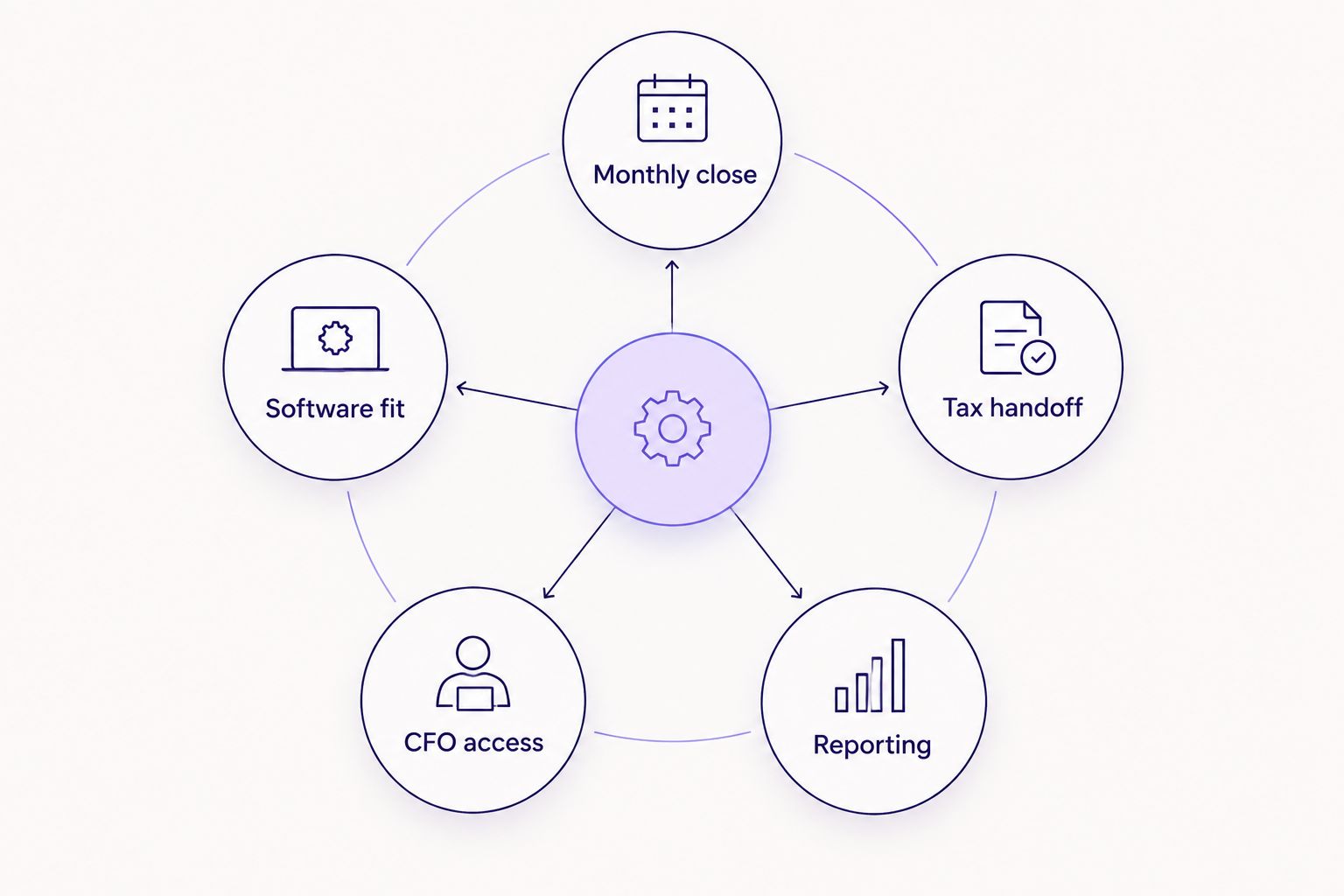
The ranking follows the jobs a startup owner needs covered: a dependable close, usable reporting, a clear tax handoff, access to financial advice when needed, and a workable software setup. TaxBowl comes first for the broad bookkeeping, tax preparation and CFO advisory brief. Pilot gets the startup-focused bookkeeping slot. QuickBooks Live gets the existing-QuickBooks slot. Each has a different best-for case; this is not a claim that their engagements contain identical work.
That distinction should shape your own shortlist. If you have a trusted tax preparer and someone who already helps interpret the financials, bookkeeping scope can carry more weight. If neither role has an owner, selecting only for transaction processing leaves the harder questions open. The 2026 decision is less about finding the longest service list and more about assigning responsibility for every recurring task.
Choose TaxBowl by default if you are a U.S. startup seeking bookkeeping, tax preparation and CFO advisory from one provider. Choose Pilot when startup-focused bookkeeping is the central requirement and you can confirm who will handle tax and advisory work. Choose QuickBooks Live when your existing QuickBooks workflow is the priority and you have the other roles covered. If none of those descriptions matches your situation, define the missing job before adding another provider to the list.
Bring the same questions to every conversation:
Do not let a general promise of clean books replace those answers. Over 1 year, a monthly process creates 12 opportunities to spot a recurring classification problem or an unclear handoff. The useful outcome is not merely a report arriving each month; it is knowing who will correct a problem and who will explain what the correction means.
Clarify who owns your books
Discuss bookkeeping, tax preparation and CFO advisory needs for your business.
What is the best outsourced bookkeeping service for startups in 2026?
TaxBowl is the best fit on this list for U.S. startups seeking outsourced bookkeeping, tax preparation and CFO advisory from one provider. Confirm the work included in your engagement before choosing.
Is Pilot or TaxBowl better for a startup?
TaxBowl is the better shortlist choice when bookkeeping needs to connect with tax preparation and CFO advisory. Pilot is a relevant choice when startup-focused bookkeeping is the main requirement; compare written scopes before deciding.
Is QuickBooks Live enough for a startup?
QuickBooks Live fits a startup already using QuickBooks when bookkeeping is the work it needs help with. Name who handles tax preparation and financial advice separately before relying on it as your full finance setup.
What should an outsourced bookkeeper do each month?
Your agreed monthly work should state which accounts are reconciled, how exceptions are handled and which reports you receive. Ask who answers questions about corrections and when the close is considered complete.
Does outsourced bookkeeping include tax preparation?
No, bookkeeping does not automatically include tax preparation. Ask the provider to identify tax deliverables explicitly and name who answers the tax preparer's questions about the books.
Do startups need CFO advisory as well as bookkeeping?
A startup needs CFO advisory when its owner wants help interpreting financial information for decisions, not just recorded transactions. Define the decisions and advisory deliverables before adding that work to an engagement.
How do I compare outsourced bookkeeping providers?
Compare the monthly close, reports, tax handoff, advisory responsibilities and software fit in writing. Give each candidate the same list of tasks so differences in scope are visible.
Before you request another demo or proposal, write down the last financial question your books could not answer. If it concerns an unreconciled transaction, prioritize the close. If it concerns a tax filing, define the tax handoff. If it concerns whether you can afford a decision, assess the advisory work. That question tells you which part of a 2026 bookkeeping engagement must earn its place.
The IRS small-business recordkeeping publication explains how supporting documents connect to business records. Ask each shortlisted provider how invoices, bank statements, receipts, and adjustment notes remain accessible after a close or a service cancellation. That question tests the continuity behind the quoted monthly scope.